Thyroid Levels Test Online: $39 vs $300 (Same Lab, Same Day)
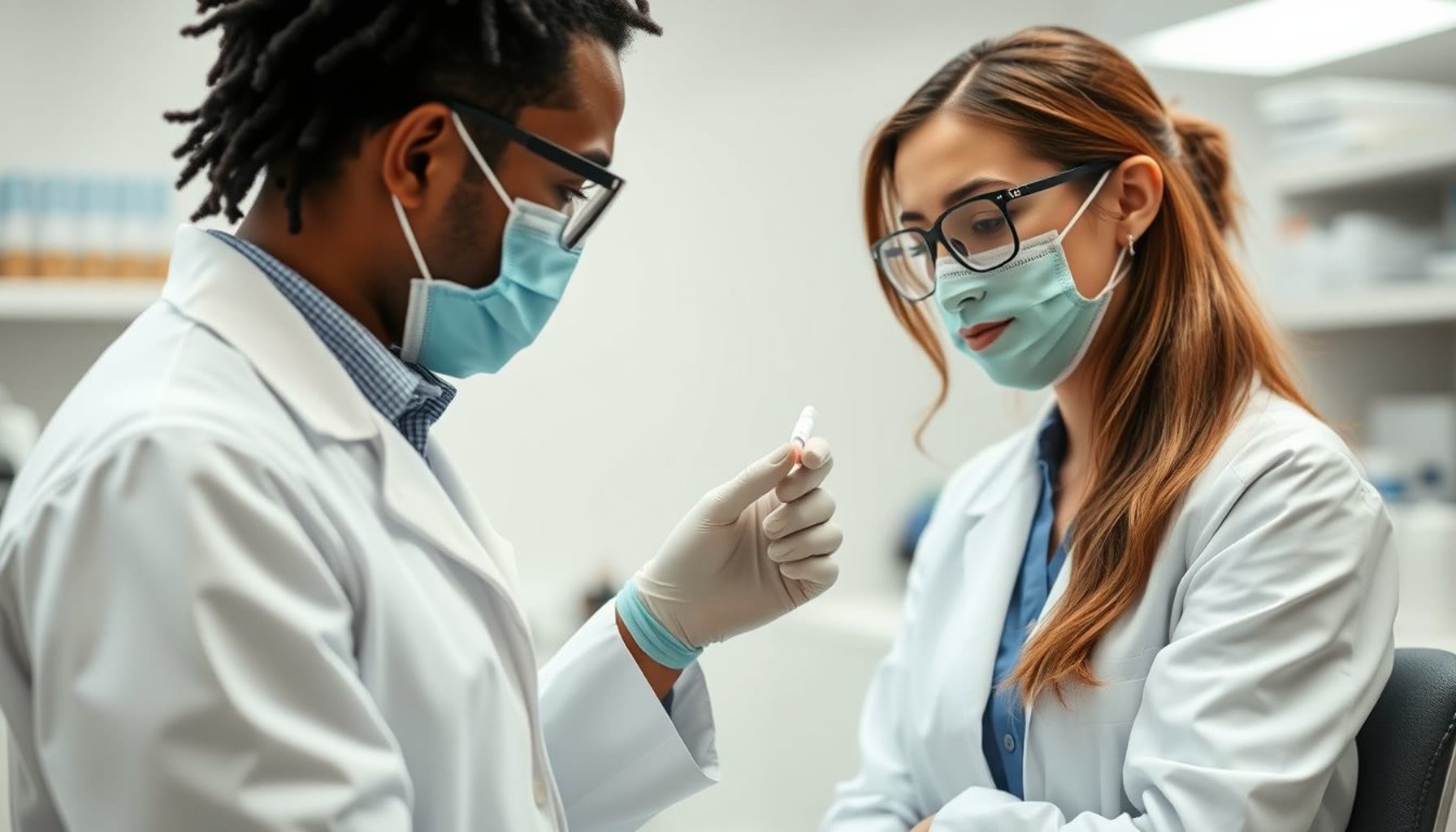
▶ Watch the full breakdown
I walk through the exact lab markers to check, what each test really costs, and how to order it yourself — no doctor visit needed. Press play.
Prefer YouTube? Watch & subscribe on the Skip The Doctor channel.
A complete thyroid panel runs about $39 at the major direct-to-consumer labs. The exact same draw, processed at the exact same Quest or LabCorp patient service center, costs $200-$400 when your primary care doctor orders it — and that's after insurance has paid its share. The vial is identical. The reagents are identical. The reference ranges printed on the PDF are identical. You can get this test at HealthLabs (skip the $200-300 doctor markup) in roughly ten minutes, drive to the same draw site your physician would have sent you to, and download results in 1-3 business days.
That's the entire pitch. The rest of this post breaks down what a thyroid panel actually measures, which version to order, how the online workflow works step by step, how to read the printout without spiraling, and the short list of situations where you genuinely should involve a clinician first.
Why a $39 panel and a $300 panel are the exact same test
The dark pattern here is identical to the one we wrote about in renters insurance pricing — $9 vs $42 a month for identical coverage: the consumer pays for the access channel, not the product. The product is commoditized; the gatekeeper isn't.
When your doctor orders a TSH and Free T4, the bill stacks up like this: the wholesale lab cost (roughly $8-$15 according to publicly filed reimbursement schedules), a $150-$300 office visit, a specimen handling fee, and if the clinic is hospital-owned, a facility surcharge that can add another $100-$200 to the same draw. The MedlinePlus consumer reference, maintained by the U.S. National Library of Medicine (part of the NIH), describes lab tests themselves as standardized assays — the variance in what you pay almost entirely reflects who ordered them and where you walked in, not the chemistry.
Direct-to-consumer labs cut the office visit and the facility fee out of the chain. Same vial, same Quest or LabCorp bench, thinner margin.
What a complete thyroid panel actually measures
According to Mayo Clinic and Cleveland Clinic patient education materials, a 'complete' thyroid panel typically includes four to six analytes. Worth knowing what each one is before you click order:
- TSH (Thyroid-Stimulating Hormone) — produced by the pituitary; the most sensitive single screen for thyroid dysfunction. Reference range usually 0.4-4.0 mIU/L, though labs vary.
- Free T4 (thyroxine) — the main hormone the thyroid secretes. 'Free' means unbound to carrier proteins, which is the metabolically active fraction.
- Free T3 (triiodothyronine) — the more active hormone, mostly converted from T4 in peripheral tissues.
- Reverse T3 — an inactive isomer; sometimes flagged in fatigue workups but not on every panel.
- TPO antibodies (Thyroid Peroxidase) — autoimmune marker; elevated in Hashimoto's thyroiditis.
- Thyroglobulin antibodies — second autoimmune marker, often ordered alongside TPO.
The NIH notes that TSH alone catches the majority of clinically significant cases, which is why most physician-ordered screens start there. A 'full panel' adds the T4/T3/antibody picture, which matters more when symptoms are present, when there's a family history of autoimmune thyroid disease, or when a previous TSH was borderline. None of this is diagnostic on its own — these are tracking markers to review with a clinician.
TSH-only screen vs full panel: which to order
If you're a healthy adult with no symptoms and just want a baseline, a TSH-only test runs about $19-$29 direct-to-consumer. If you have actual symptoms — unexplained fatigue, cold intolerance, hair thinning, weight changes, persistent brain fog, irregular cycles — Mayo Clinic recommends a more complete picture because a normal TSH can occasionally sit alongside abnormal T4/T3 in subclinical patterns.
The pricing tiers, roughly:
| Test | Direct-to-consumer | Through doctor (post-insurance) |
| TSH only | $19-$29 | $80-$150 |
| TSH + Free T4 | $29-$49 | $150-$250 |
| Full panel (TSH/T4/T3/antibodies) | $59-$99 | $300-$500 |
For most people doing an annual check-in or following up on a borderline reading from a previous test, the TSH + Free T4 combo at roughly $39 is the sweet spot. The antibody add-ons matter when there's a family history of Hashimoto's or Graves' disease, or when prior labs already raised that question.
How online thyroid testing actually works, step by step
The workflow is straightforward and surprisingly identical to what happens at a clinic — just without the visit:
- Step 1: Order online. Pick your panel, pay by card. The platform's affiliated physician network issues the lab requisition behind the scenes — this is what makes it legal in 48 states (NY, NJ, and RI have variations; the platform will tell you at checkout).
- Step 2: Get your requisition. Usually a PDF emailed within minutes, sometimes also pushed to a Quest or LabCorp portal.
- Step 3: Walk into the lab. Same Quest or LabCorp patient service center your doctor would have sent you to. Most accept walk-ins; some prefer appointments. Bring photo ID and the requisition.
- Step 4: Draw. 5-10 minutes. One vial. No fasting required for thyroid alone, though if you're combining with lipids or glucose, fast 8-12 hours.
- Step 5: Results. 1-3 business days, delivered as a PDF to your account. Includes reference ranges and flags out-of-range values.
According to the CDC's Division of Laboratory Systems, any U.S. lab processing patient specimens for clinical results must hold CLIA certification — which Quest and LabCorp both do at the highest tier. The result printout you get direct is the same document your doctor would have received.
CLIA certification: the only quality marker that matters
The Clinical Laboratory Improvement Amendments (CLIA) program, administered jointly by CMS, the CDC, and the FDA, sets federal quality standards for clinical labs. The CDC publishes the registry. If a lab is CLIA-certified at the 'high complexity' tier (where thyroid testing sits), it has passed the same proficiency testing your hospital's lab passes — because in most cases it is your hospital's reference lab.
Both Quest Diagnostics and Labcorp — the two networks behind virtually every reputable direct-to-consumer thyroid panel in the U.S. — operate at the highest CLIA tier. So do the niche labs that some platforms route to. What you should avoid: finger-prick mail-in kits processed at labs you can't look up in the CLIA registry, or any 'wellness panel' that doesn't disclose where the specimen is processed. The chemistry on a venous draw at Quest is not the same as the chemistry on a dried blood spot at an unnamed processor.
The counter-intuitive bit: your doctor and a direct-to-consumer platform send your blood to the exact same Quest patient service center — the only thing that changes is who keeps the $260 in the middle. That's why ordering directly through HealthLabs at roughly $39 instead of $300 isn't a quality compromise; it's the same draw with a shorter invoice chain.
Reading your thyroid results without spiraling
The PDF will list each analyte, your number, the reference range, and a flag if you're out of range. A few things worth knowing before you read the printout, all consistent with Cleveland Clinic and Mayo Clinic patient guidance:
- Reference ranges vary by lab. A 'normal' TSH at one lab can be flagged 'high' at another. Always compare to the range printed on your report, not numbers you read online.
- Subclinical patterns exist. A mildly elevated TSH with normal Free T4 (subclinical hypothyroidism) is common, often doesn't require treatment, and usually warrants a repeat draw in 6-12 weeks before any intervention.
- One reading is a snapshot. Thyroid function fluctuates with illness, stress, recent iodine intake, biotin supplements (which can interfere with the assay), and time of day. A single out-of-range result is a signal to retest, not a diagnosis.
- Don't self-treat. Thyroid hormone replacement, anti-thyroid medication, and antibody-driven workups are clinician territory. Online testing gets you to the conversation faster and cheaper; it doesn't replace the conversation.
The NIH explicitly cautions against interpreting individual lab values without clinical context — labs are one input into a picture that also includes symptoms, physical exam, and history. Bring the PDF to your next appointment if anything is flagged.
When you should not skip the clinician
Direct-to-consumer testing is a screening and monitoring tool, not a substitute for care when care is actually needed. Skip the online route and book a visit if any of these apply:
- You're pregnant or trying to conceive — thyroid management in pregnancy has its own targets and timing.
- You have a visible neck lump or noticeable swelling at the front of the neck.
- You're already on thyroid medication and adjusting dose — that needs structured follow-up.
- You have rapid heart rate, tremor, dramatic weight loss, or other acute hyperthyroid symptoms — those warrant prompt evaluation, not a 3-day result turnaround.
- You have a personal or family history of thyroid cancer.
- Your last lab showed a TSH below 0.1 or above 10 — those are not 'order another online test' numbers.
For the broader middle — annual checks, mild persistent symptoms, post-diagnosis monitoring, curiosity about a baseline — an online thyroid panel is the same chemistry at a fraction of the bill.
Bottom line and how to actually order
If your goal is a number on a printout, the cheapest defensible path is a direct-to-consumer panel processed at a CLIA-certified Quest or LabCorp facility. Pick the panel that fits your situation (TSH-only for baseline, TSH + Free T4 for symptom workup, full panel with antibodies for autoimmune concerns), pay $19-$99 instead of $200-$500, and bring the PDF to a clinician if anything is flagged.
Ready to skip the markup? Order your thyroid panel through HealthLabs for around $39 instead of the $300 your doctor's office would bill — same lab network, same chemistry, results in 1-3 days. Then take the printout to your next appointment with a real conversation starter instead of an itemized invoice.
Affiliate disclosure: this post may contain affiliate links; we earn a commission at no extra cost to you.
Order Your Own Lab Tests — No Doctor Required
HealthLabs lets you book bloodwork online, pay up to 80% less than a clinic, and use your FSA/HSA. Results in 24–48 hrs.
Order at HealthLabs → Save 60–80%Sources & references
This guide summarizes information from recognized medical authorities. Verify any health decision with these primary sources and your own clinician:
Ready to skip the markup?
Order your bloodwork online through HealthLabs. FSA/HSA accepted. Same certified labs, up to 80% less.
Order Lab Tests at HealthLabs →Get the next guide free
Plain-English lab-testing guides and price breakdowns, straight to your inbox. No spam.