How Much Do Blood Test Cost? $29 vs $300 (Same Lab, 2026)
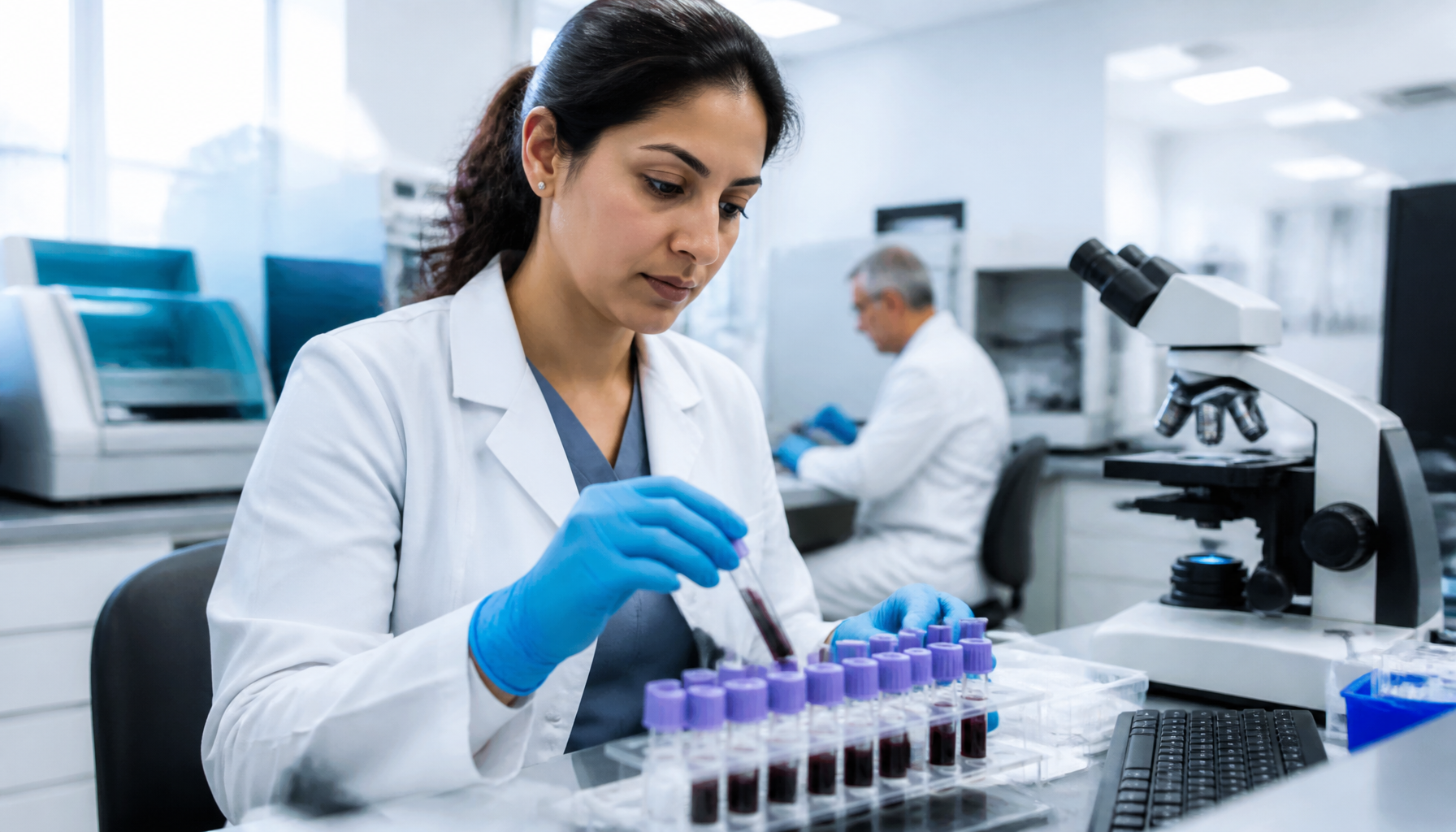
A basic metabolic panel costs about $29 direct-to-consumer at a Quest Diagnostics or LabCorp collection site. The same blood draw, ordered during a primary-care visit, routinely bills $250 to $400 before your insurance ever touches it. That is not a coupon or a fluke — it is the same tube of blood, run on the same analyzer, at the same reference lab. If you already know which panel you want, you can Get this test at HealthLabs (skip the $200-300 doctor markup) and pay the cash price without a physician visit at all.
The rest of this post breaks down what common blood panels actually cost in 2026 — from a $19 CBC to a $199 hormone workup — why the hospital-billed price is so much higher, and when paying cash is genuinely cheaper than using insurance. Every price cited is a public 2026 direct-to-consumer rate you can verify in five minutes.
The real gap: $29 cash vs $300 billed
According to the Cleveland Clinic, a comprehensive metabolic panel (CMP) measures 14 markers including glucose, kidney function, and electrolytes. It is one of the most-ordered tests in outpatient medicine. Direct-to-consumer lab retailers sell that exact CMP for $29 to $39 cash. Hospital-based outpatient labs routinely bill the same panel at $250 to $400, and freestanding clinic labs land somewhere in the middle at $80 to $150.
The gap is not about lab quality — Quest and LabCorp run most of the country's outpatient blood work regardless of who ordered it. It is about billing infrastructure. A hospital-attached lab charges a facility fee, an ordering-physician fee, and often a phlebotomy fee on top of the analyte cost. A cash retailer skips all three because you walked in the door yourself.
Two things follow from that. First, if you have a high-deductible plan and are paying out-of-pocket anyway, cash is almost always cheaper than the in-network price. Second, insurance does not guarantee the lowest number — sometimes it guarantees a much higher one.
2026 cash prices for the tests people actually order
Here are current retail cash prices for common panels at the major direct-to-consumer platforms as of September 2026. These are the prices at checkout, before any subscription discount.
| Test | Typical cash price | Hospital-billed range |
|---|---|---|
| Complete Blood Count (CBC) | $19 - $29 | $100 - $250 |
| Comprehensive Metabolic Panel (CMP) | $29 - $39 | $250 - $400 |
| Lipid Panel | $29 - $39 | $150 - $300 |
| Hemoglobin A1c (diabetes) | $29 - $49 | $100 - $250 |
| Thyroid (TSH) | $29 - $59 | $150 - $400 |
| Vitamin D, 25-hydroxy | $39 - $79 | $200 - $500 |
| Testosterone, total | $39 - $89 | $150 - $350 |
| Full female hormone panel | $149 - $199 | $600 - $1,400 |
| STD 8-panel | $149 - $199 | $400 - $900 |
Two patterns jump out. Cash prices for single markers cluster around $29 to $39. Multi-marker panels scale roughly linearly with the number of analytes, not with the reputation of the venue. That is why the same wellness panel can be $89 direct or $1,200 through a hospital — the hospital is not adding tests, it is adding overhead.
Why hospitals bill 10x more for the same tube of blood
Hospital chargemaster prices — the sticker price before any insurance negotiation — reflect three costs the retail lab does not carry. First, a facility fee, which the Centers for Medicare and Medicaid Services allows outpatient hospital departments to bill on top of the analyte. Second, an ordering-physician evaluation and management charge, even if the visit was purely to sign a lab requisition. Third, higher fixed overhead — round-the-clock staffing, credentialing, and malpractice coverage that a walk-in draw site does not carry.
Those costs are real, but they are not proportional to the value of a blood draw. A phlebotomist spends the same three minutes drawing a tube regardless of the ownership of the building. The analyte runs on the same Beckman or Roche analyzer in a central lab. The Mayo Clinic notes that most large hospital systems actually contract with Quest, LabCorp, or a similar national reference lab to run outpatient tests — the hospital lab is often just an intake and courier operation.
The counter-intuitive part: paying cash at a direct-to-consumer retailer is not lower quality. In many cases the sample lands in the exact same lab it would have if a hospital had drawn it.
When insurance actually costs MORE than cash
This is the piece most patients miss. If you are on a high-deductible plan (roughly half of employer-sponsored plans in 2026, per KFF), routine blood work counts against your deductible at the negotiated rate — not the cash rate. A negotiated rate of $180 for a CMP will feel like a discount against the $400 chargemaster, but it is still six times the $29 cash price. You pay all $180 out of pocket until you hit your deductible.
Three situations where cash beats insurance:
- High-deductible plans before the deductible resets. A $29 cash CMP is cheaper than a $180 negotiated CMP applied to a deductible you may never hit.
- HSA-eligible expenses. Direct-to-consumer lab purchases are HSA and FSA eligible with a receipt, so the tax advantage carries over.
- Tests your plan does not cover. Many wellness panels, hormone panels, and heavy-metal panels are not considered medically necessary and get billed at 100% to the patient regardless.
If you want to run the same shop-around comparison on a bigger annual bill, our sister site walks through how much car insurance actually costs in 2026 — same principle: the sticker price and the price you will pay are two different numbers, and shopping around cuts hundreds off both.
How to order your own blood work in 2026
Thirty-six US states allow patients to order most routine blood tests directly, without a physician's requisition, under state-specific direct-access testing laws. In the remaining states, retail platforms use an independent physician network to sign the order on your behalf at no extra cost. Either way, the workflow is the same:
- Pick the panel online and pay the cash price.
- Receive an emailed requisition within a few minutes.
- Walk into any partner draw site (Quest or LabCorp locations, roughly 4,500 nationwide) without an appointment.
- Results post to your online account in 1 to 3 business days, typically as a PDF with reference ranges.
You can Get this test at HealthLabs (skip the $200-300 doctor markup) and complete this entire flow for less than the cost of a nice dinner. The requisition is real, the lab is CLIA-certified, and the results are the same document your primary-care physician would receive.
What the numbers mean: bring results to a clinician
Ordering is easy. Interpreting is not. According to MedlinePlus, a single out-of-range value on a routine panel is common and often not clinically significant — hydration, recent meals, sleep, exercise, and even the time of day can move markers by 10 to 30%. The NIH recommends reviewing any abnormal result with a licensed clinician who has access to your full history before making any decision about diet, supplements, or medication.
Direct-to-consumer testing is a good tool for tracking trends over time — whether your LDL is drifting up year over year, or whether your vitamin D is responding to more sun exposure. It is not a substitute for a diagnostic workup, and no retail lab claims otherwise. Every major platform tells you in the fine print to bring flagged results to a physician.
Cost-wise, that follow-up conversation is usually a covered primary-care visit or a $30 to $60 telehealth call. So the total cash pathway for a routine check-in is roughly $29 for the panel plus $50 for a video visit if anything looks off — under $80 for the equivalent of a $500 hospital-billed workup.
A simple decision framework
When you are deciding whether to pay cash or run something through insurance, ask three questions:
- Have I hit my deductible? If no, cash is almost always cheaper for routine panels.
- Is the test flagged as wellness or screening? Insurers frequently deny these, so cash gets you a guaranteed price.
- Do I actually need a physician visit, or just the lab number? If it is a follow-up on a stable marker, cash plus a patient portal beats a $200 office visit every time.
The CDC's own preventive-screening guidance emphasizes tracking key markers annually for adults over 40 — CBC, CMP, lipids, A1c, and TSH. Bundled cash, that is roughly $120 to $150 a year. Bundled through a hospital outpatient lab, the same five tests can bill more than $1,200 before any insurance adjustment.
Ready to price it out? Compare the exact panels above at HealthLabs, where the same tests your doctor would order run $29 to $199 instead of $250 to $1,400. Print the requisition, walk into any Quest or LabCorp draw site, and bring the PDF results to whichever clinician you already trust.
Affiliate disclosure: this post may contain affiliate links; we earn a commission at no extra cost to you.
Order Your Own Lab Tests — No Doctor Required
HealthLabs lets you book bloodwork online, pay up to 80% less than a clinic, and use your FSA/HSA. Results in 24–48 hrs.
Order at HealthLabs → Save 60–80%Sources & references
This guide summarizes information from recognized medical authorities. Verify any health decision with these primary sources and your own clinician:
Ready to skip the markup?
Order your bloodwork online through HealthLabs. FSA/HSA accepted. Same certified labs, up to 80% less.
Order Lab Tests at HealthLabs →Get the next guide free
Plain-English lab-testing guides and price breakdowns, straight to your inbox. No spam.