Cost of STD Test: $24 vs $250 (Same Lab, 90% Less)
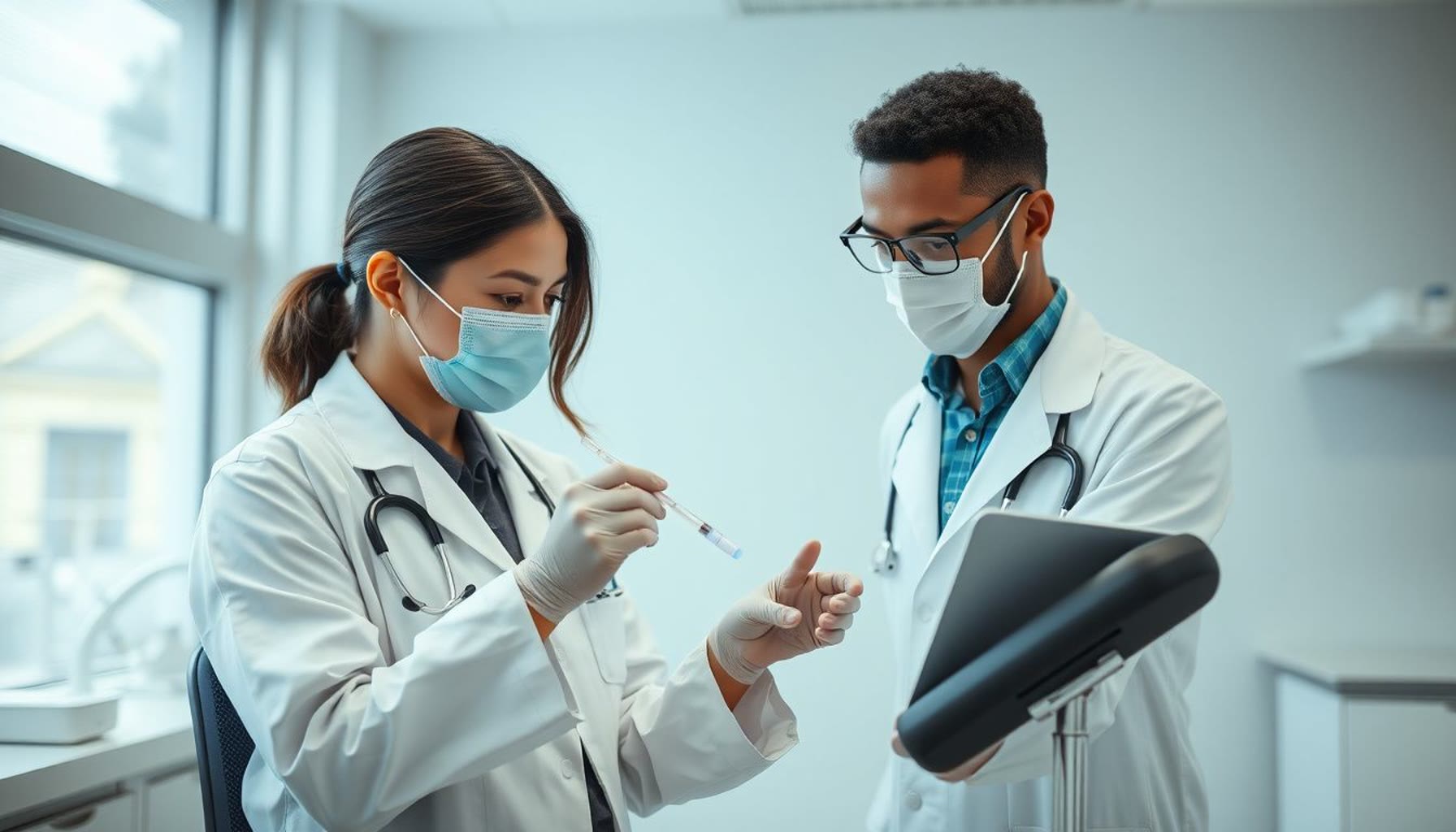
▶ Watch the full breakdown
I walk through the exact lab markers to check, what each test really costs, and how to order it yourself — no doctor visit needed. Press play.
Prefer YouTube? Watch & subscribe on the Skip The Doctor channel.
The honest cost of an STD test is $24 to $198. That's not a typo, and it's not some sketchy mail-order kit. That's the cash price at a real Quest Diagnostics or LabCorp facility — the same buildings your doctor sends your blood to. The catch is that when your doctor orders it, the bill becomes $250 to $600 because of office visits, draw fees, and the hospital outpatient code. Get this test at HealthLabs (skip the $200-300 doctor markup) and you pay the lab's wholesale rate plus a small platform fee — usually $139 for a full 10-panel, versus the $400+ you'd pay walking into a clinic.
I've watched friends pay $478 at an urgent care for a basic chlamydia/gonorrhea swab. The same swab, run by the same lab tech the next county over, was $49 cash. The only difference was who ordered it. This post breaks down the actual numbers, what each panel costs, and why the doctor's office is the most expensive way to test for something that takes 15 minutes of lab time.
The Real Cost of an STD Test in 2026 (By Panel)
STD testing prices vary wildly based on how many infections you screen for. Here's what direct-to-consumer pricing looks like at the major lab networks (Quest, LabCorp, Sonora Quest) when you order through a third-party requisition service rather than your doctor:
| Test Panel | Direct Cash Price | Doctor-Ordered Price |
| Single test (chlamydia OR gonorrhea) | $24-$49 | $108-$185 |
| 2-panel (chlamydia + gonorrhea) | $79-$99 | $165-$280 |
| 5-panel (CT/GC/syphilis/HIV/Hep C) | $129-$149 | $320-$450 |
| 10-panel comprehensive | $198-$259 | $478-$650 |
| HIV-only (4th-gen antibody/antigen) | $39-$59 | $140-$220 |
| Herpes 1 & 2 IgG | $65-$85 | $180-$310 |
Those direct prices include the lab fee, the doctor's order (a licensed physician signs off on the requisition — required by law, but they never see you), and the result delivery. There's no separate "draw fee" because the lab includes it. Compare this to the doctor route, where you typically pay an office visit ($150-$250), a venipuncture fee ($25-$40), and then the lab's chargemaster price, which is 3-5x the negotiated rate insurance would have paid.
Why Your Doctor's STD Test Costs $400 More for the Same Result
Here's the part nobody explains: the lab work itself is identical. When Quest runs an Aptima chlamydia/gonorrhea NAAT for your doctor, it costs Quest about $8-$12 in reagents. When the same Quest lab runs the same Aptima test for a direct-to-consumer platform, it costs them the same $8-$12. The difference is the markup chain.
Your doctor's office bills a CPT code (87491 for chlamydia NAAT, for example) at their "chargemaster" rate, which is typically 4-8x the Medicare allowable. They then negotiate with your insurance, who pays maybe 1.5x Medicare. You pay the deductible portion of whatever the insurance allows. If you're uninsured or on a high-deductible plan, you eat the full chargemaster — which is how a $12 test ends up on your bill at $185.
Direct-to-consumer platforms cut out the office, the front desk, the billing department, the insurance negotiation, and the chargemaster. They negotiate a flat wholesale rate with Quest or LabCorp (around $15-$25 for that same NAAT), tack on a $10-$30 platform fee, and charge you the total. That's how a comprehensive panel that would be $478 at the clinic becomes $139 online.
Insurance Doesn't Always Save You Money on STD Tests
This is the counter-intuitive part: if you have a high-deductible health plan (HDHP), paying cash for an STD test is almost always cheaper than running it through insurance. A typical HDHP has a $3,000-$7,000 deductible. Until you hit that, you're paying the "insurance-negotiated rate," which for a 5-panel STD screen is typically $280-$420. That money also doesn't reset until January.
Cash-pay at a direct lab is $129-$149. Even if you have a $0 deductible PPO, you're often better off paying cash to avoid the test appearing on your Explanation of Benefits, which some patients prefer for privacy reasons (STD codes are not protected differently than any other lab code, and they DO appear on EOBs sent to the policyholder — which matters if you're on a parent's or spouse's plan).
If you're picking a health plan and want to factor in routine testing costs like this, read 7 Health Insurance Open Enrollment Mistakes That Quietly Cost Americans $1,200+ Per Year — most people pick a plan based on premium alone and end up paying more out-of-pocket for routine screenings than they would have on a slightly more expensive plan.
What Tests Should Actually Be in Your STD Panel?
The CDC recommends a baseline screen of: HIV (4th-gen antigen/antibody), syphilis (RPR or treponemal), chlamydia (NAAT), gonorrhea (NAAT), and hepatitis B and C if you have risk factors. That's the 5-panel most platforms offer for $129-$149. The HealthLabs comprehensive panel runs about $198 and adds herpes 1 & 2 IgG, trichomoniasis, and hepatitis A — which together would run you $310-$420 at an urgent care.
Avoid paying extra for:
- HSV-1 testing without symptoms — Over 50% of US adults have it from childhood; a positive result without symptoms is medically useless and CDC explicitly recommends against routine screening.
- HPV testing for males — There's no FDA-approved HPV test for men and no recommended screening protocol.
- "Rapid" in-office antibody tests — These have 3-6 week window periods and miss recent exposures that NAAT catches in 1-2 weeks.
Pay extra for the NAAT-based chlamydia/gonorrhea test (urine or swab) — it's the gold standard and detects infection 1-2 weeks post-exposure, versus 3+ weeks for older methods.
How to Actually Order a Direct-to-Consumer STD Test
The workflow is straightforward and takes about 15 minutes total:
- Step 1: Pick the panel that matches your exposure window and risk factors. The 5-panel covers 95% of cases for $129-$149.
- Step 2: Pay online. A licensed physician in your state reviews and signs the requisition automatically — this is required by federal law and is the same process used by every telehealth platform.
- Step 3: Walk into a Quest Patient Service Center or LabCorp draw station. There are roughly 2,200 Quest and 1,900 LabCorp locations in the US — there's almost certainly one within 10 miles of you. No appointment needed at most.
- Step 4: Get results in 1-3 business days via secure portal. If positive, the platform typically offers a free phone consult with a physician who can prescribe treatment (chlamydia and gonorrhea are usually a single dose of antibiotics that costs $4-$15 at GoodRx pricing).
Total time from order to results: 3-5 days. Total cost: $129-$198 for comprehensive coverage. Compare to a clinic visit: 1-2 week wait for an appointment, $250-$600 bill, same results delivered through a worse portal.
The $24 Trick: Single-Test Pricing for Targeted Re-Tests
Here's something most people don't know: if you've had a known exposure to a specific infection (say, a partner tested positive for chlamydia), you don't need a full panel. A single-test NAAT for chlamydia at most direct-to-consumer platforms runs $24-$49. That's it. The same test at an urgent care is $108-$185, and at an ER it can hit $400+ because they bundle it with a facility fee.
This also matters for retesting after treatment. The CDC recommends a test-of-cure for gonorrhea 7-14 days post-treatment and a re-screen for chlamydia and gonorrhea 3 months post-treatment (because re-infection from untreated partners is common). Two single tests at $49 each = $98 for both retests. Two clinic visits for the same retests = $500-$900. Over a year of vigilant retesting, that's a $600+ difference for the exact same lab work.
When You Should NOT Use a Direct-to-Consumer Lab
This isn't a one-size-fits-all answer. Skip the DIY route and see a doctor in person if:
- You have active symptoms (discharge, sores, painful urination, pelvic pain) — you need a physical exam and possibly empirical treatment same-day, not a 3-day lab turnaround.
- You were sexually assaulted — hospitals offer free SANE exams with prophylactic treatment and evidence collection; never pay for this.
- You're pregnant — STD screening should be coordinated with your OB and is typically covered 100% by insurance with no deductible under ACA preventive care rules.
- You're under 18 — most direct-to-consumer platforms require 18+; minors can access free confidential testing at Planned Parenthood and most county health departments.
- You suspect syphilis or HIV exposure within the last 72 hours — you need PEP (post-exposure prophylaxis) immediately, which requires an ER or urgent care.
For routine screening, peace-of-mind testing, new-relationship testing, and post-treatment retesting, direct-to-consumer is faster, cheaper, and more private. For acute symptoms or emergencies, the clinic is worth the markup.
Bottom Line: Stop Overpaying for a $12 Lab Test
A comprehensive STD panel costs the lab about $40 in reagents. It costs you $129-$198 direct-to-consumer or $400-$650 through a doctor's office. The result is identical because it's the same lab. The only difference is the markup chain between you and the test tube.
If you want to skip the office visit, the markup, and the awkward conversation — order a comprehensive STD blood test starting around $139 (vs $478 at urgent care), walk into your local Quest or LabCorp, and have results in 72 hours. Your data stays off your insurance EOB, your wallet keeps an extra $300, and you get the same answer.
Affiliate disclosure: this post may contain affiliate links; we earn a commission at no extra cost to you.
Order Your Own Lab Tests — No Doctor Required
HealthLabs lets you book bloodwork online, pay up to 80% less than a clinic, and use your FSA/HSA. Results in 24–48 hrs.
Order at HealthLabs → Save 60–80%Sources & references
This guide summarizes information from recognized medical authorities. Verify any health decision with these primary sources and your own clinician:
Ready to skip the markup?
Order your bloodwork online through HealthLabs. FSA/HSA accepted. Same certified labs, up to 80% less.
Order Lab Tests at HealthLabs →Get the next guide free
Plain-English lab-testing guides and price breakdowns, straight to your inbox. No spam.